Battling trauma: Shropshire soldier tells of living with post-traumatic stress disorder
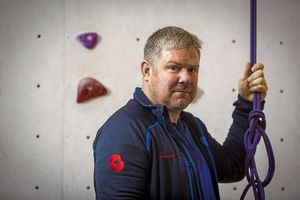
Neil Harrison remembers the day when his comrades left for Afghanistan. "I saw the men getting on to the coaches," says the former Army warrant officer. "I froze and walked behind the main guardroom on the camp to avoid them.
"I just couldn't say goodbye or cope with the idea that I may never see them again. That's when I knew there was a problem.
"I still regret that and still carry the guilt of not saying goodbye to the lads."
After an Army career spanning 20 years, Neil was diagnosed with post-traumatic stress disorder in 2012.
He is far from alone. New figures released by the Ministry of Defence reveal that 473 service personnel were discharged from the Army, Navy or RAF for "mental or behavioural" reasons during 2015/16 – more than double the number compared to five years ago.
But the figures for post-traumatic stress are even more stark. Of the 473, 189 were diagnosed for PTSD, more than three times the 50 who were diagnosed five years ago.
Paul Berry, of the Combat Stress charity that supports veterans across the Midlands with mental health problems from its base in Newport, says the figures reflect his own findings.
"We have found a rise in the number of veterans seeking support from Combat Stress after being medically discharged from the military," he says.
"In the last five years we have seen a 71 per cent increase in veterans seeking support for mental health issues and that they are seeking support more quickly.
"While the reasons for this are unclear, it could be due to the reduction in stigma that is resulting in more ex-servicemen and women feeling able to come forward for treatment and sooner. It could also be that we are starting to see a small but significant increase in the number of veterans with mental health issues."
While the damage to casualties of war with visible physical injuries is there for all to see, the symptoms of mental trauma can take much longer to surface. Cases of PTSD were first documented during the First World War when soldiers developed shell shock as a result of the harrowing conditions in the trenches. But the condition wasn't officially recognised as a mental health condition until 1980, when it was included in the Diagnostic and Statistical Manual of Mental Disorders, developed by the American Psychiatric Association.
For Neil, from Market Drayton, the problems came when he was transferred into the role of casualty reporting officer.
This involved dealing with soldiers who had been evacuated from Afghanistan, often coping with life-changing injuries. Neil's work involved liaising between the unit and the families to ensure soldiers were looked after during their time in hospital and during recovery.
"I would take families to visit the injured soldier," he says.
"I spent my life in a car, visiting very distressed family members. It really took its toll on me."
On his return to normal duties he visited a Royal Navy doctor to check out a worsening knee injury.
"I tried to tell her about my knee and I just burst into tears. That doctor saved me. If it hadn't been for her I would have just tried to get on with work. I was diagnosed with vicarious PTSD and started a long period of counselling," he says.
Vicarious PTSD can occur among those who work with trauma sufferers, such as Neil's casualty reporting work. It affects people emotionally. Some of the issues people face are a reduced ability to feel hope, poor sense of humour and a lower sense of being worth loving, to name but a few of the issues.
For Neil, it was the Battle Back Centre in Lilleshall that helped him come to terms with his condition. The centre, which was officially opened in November 2012 by Olympic gymnastics medalist Beth Tweddle, was set up with the help of £27 million from the Royal British Legion. It is run in conjunction with the Ministry of Defence and Sport England and gives wounded, sick and injured service personnel the chance to try new sports.
Describing what it is like visiting Battle Back for the first time, Neil says: "You arrive with no idea what to expect and leave with a sense of achievement and the camaraderie that we often miss when we leave.
"When I turned up it was one of the first courses. I was so nervous and had been home, isolated for many months.
"It gave me the confidence and it was great to be around people who were nice. It's very lonely when you leave the military."
During his time at the centre, Neil developed a love of photography and now takes pictures of the activities at the centre, where he works as a volunteer.
Marie-Louise Sharp, the Royal British Legion's health and care policy adviser, says: "The legion is dedicated to campaigning for better provision for those with mental health and wellbeing concerns, and we work to educate medical professionals on the needs of the armed forces community.
"We believe in collaboration with other organisations, campaigns and charities, and refer our beneficiaries to access their services."
She says the legion works with many organisations specialising in mental wellbeing, including Combat Stress and Heads Together, which is part of The Royal Foundation of The Duke and Duchess of Cambridge and Prince Harry.
Neil remembers feeling a sense of guilt at being home while others were still out fighting. But he says the Battle Back Centre has allowed him to spend time with other people who understood what he had been through.
"I had negative thoughts – that being sent home meant that I'd failed or I was letting my peers and my regiment down and I was very disappointed with myself," he says.
"Your family do try hard to understand, but the centre puts you in a situation where you're surrounded by people that do understand your background and you can talk through your problems."